A seizure diary that helps your neurologist help you
Neurologists often rely on a seizure diary to understand how epilepsy is behaving and whether treatment is working. Seizures can be hard to remember, and some you may not remember at all, so a quick, structured record made as soon as possible afterwards is valuable.
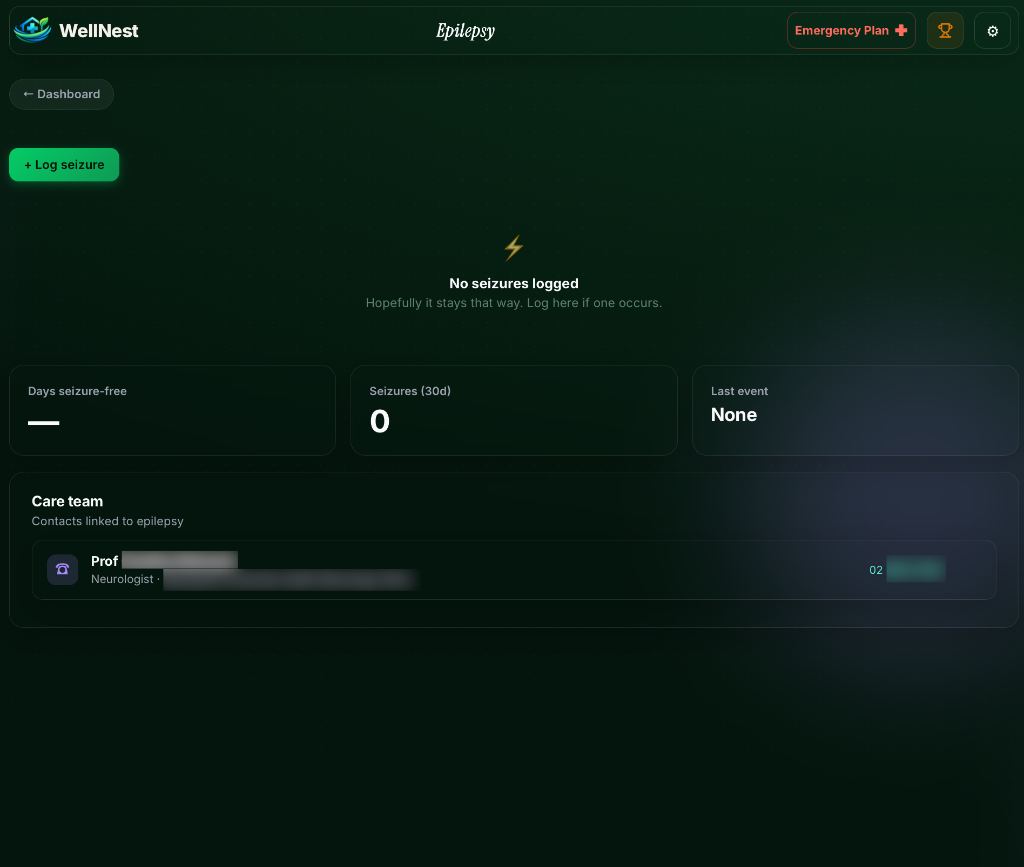
Record every seizure in detail
Date, time and duration; seizure type and severity; warning signs or aura; possible triggers such as missed sleep, stress, illness, alcohol or missed medication; whether rescue medication was taken; notes from anyone who witnessed it.
Stay on top of medications
Dose reminders sit in the same place as your seizure log, making it easier to spot links between missed doses and seizures.
An emergency plan your carers can open in one tap
Keep your seizure first-aid steps in WellNest's Emergency Plan and share them with family, friends, teachers or colleagues.
Share your seizure log
Export a PDF report of seizures, medications and appointments for your neurologist or epilepsy nurse.
Learn more: Seizure first aid, and what to record afterwards
FAQ
What should a seizure diary include?
Date, time, duration, seizure type, warning signs, possible triggers, recovery and medication taken. WellNest has a field for each.
Can a carer log a seizure for me?
They can record details on your phone. Many people ask a witness to add notes after a seizure.
Does WellNest detect seizures?
No. WellNest is a diary and record-keeping tool, not a seizure detection or monitoring device.
Related guides
Ready when
you are.
7-day free trial · Cancel anytime · Built with care in Australia