A CRPS tracker built by someone who understands it
Complex Regional Pain Syndrome (CRPS) is hard to explain, and harder still to recall accurately in a 15-minute appointment. Symptoms shift from day to day. Pain can be out of proportion to the original injury, the affected limb can change temperature or colour, and even light touch can hurt. WellNest gives you a simple, dated record of what's actually happening, so your specialist sees the pattern rather than a snapshot.
30 days of Premium free, no card · Free plan after that · Web and iPhone
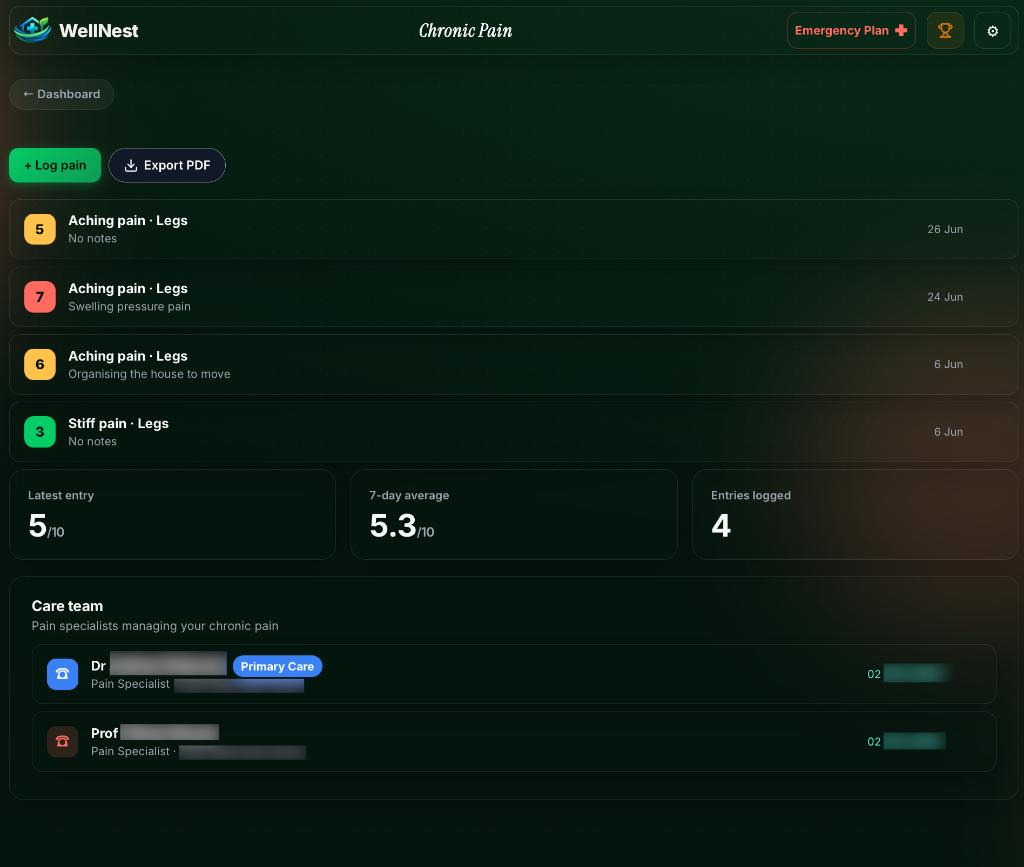
What you can log
Pain severity, location and pain type (burning, stabbing, aching) and how long it lasted; affected limbs; temperature, colour and swelling changes, and sensitivity or allodynia, in your own words; triggers and what helped; medications and side effects in the same timeline.
Take a clear report to your pain specialist
Export a PDF of your symptoms, medications and appointments for any date range. Instead of “I think it's been worse lately,” you can show when flares happened, how long they lasted and what came before them.
Plan for bad days
Keep a flare-up plan in WellNest and share it with carers or family in one tap. You can also track physio and desensitisation routines in the Exercises section.
What to track with CRPS, and why it matters
CRPS can involve more than pain: changes in skin colour or temperature, swelling, stiffness and sensitivity to touch are common. These changes can come and go, so a specialist often relies on your record of them. Each time you log, note where it is, how strong it is on the same 0 to 10 scale, what it feels like (burning, shooting, aching) and how long it lasts. A short note on colour, temperature or swelling captures what is hard to describe weeks later.
Find the patterns behind your flares
Many people with CRPS notice that weather, activity, stress, poor sleep or a long day can come before a flare. Logging possible triggers and what you tried, such as rest, medication, heat or cold, or physio exercises, next to each entry lets you look back and see what tends to happen before a bad day and what actually helps.
How long to track before your appointment
Two to four weeks of consistent entries is usually enough for patterns to show. Log on better days as well as bad ones, note any medication change on the day it happens, and bring a short summary with your top questions rather than every individual entry.
Learn more: CRPS symptoms – what to track
FAQ
Is WellNest a CRPS diary?
Yes. It's a structured CRPS diary that records pain severity, affected areas, pain type, triggers and medications with every entry dated, plus space to note swelling, temperature changes and sensitivity.
Can I share my CRPS log with my doctor?
Yes. You can generate a PDF report and share it with your GP, pain specialist or physiotherapist.
Does WellNest diagnose CRPS?
No. WellNest is a record-keeping tool. Diagnosis and treatment decisions belong with your healthcare team.
What is the best app for tracking CRPS?
Look for an app that records more than a pain score: affected areas, pain type, triggers, relief methods and medications, with a dated report you can hand your pain specialist. WellNest was built by someone with lived experience of chronic pain to do exactly that, and it also keeps your appointments, emergency plan and medical expenses in one place.
How much does WellNest cost?
WellNest Premium is AU$4.99 per month or AU$44.99 per year, with a 30-day free trial (no card needed).
Is WellNest available on Android?
Not yet. WellNest is available on iPhone and on the web.
Related guides
Free · no account needed
Get the free appointment-prep kit
Everything you need for your next specialist visit, sent straight to your inbox:
- Printable 0–10 pain scale chart
- Words that help you describe pain to your doctor
- Specialist appointment checklist
- Free one-page symptom summary maker
Ready when
you are.
30 days free · No card needed · Built with care in Australia